

Navigating PFI Handback: Strategic Planning and Benchmarking for NHS Estates
As PFI contracts for NHS estates draw to a close, the handback phase presents both challenges and opportunities. Are you prepared for a seamless transition?
Navigating PFI Handback: Strategic Planning and Benchmarking for NHS Estates
As PFI contracts for NHS estates draw to a close, the handback phase presents both challenges and opportunities. How prepared are you to ensure a seamless transition?
Introduction
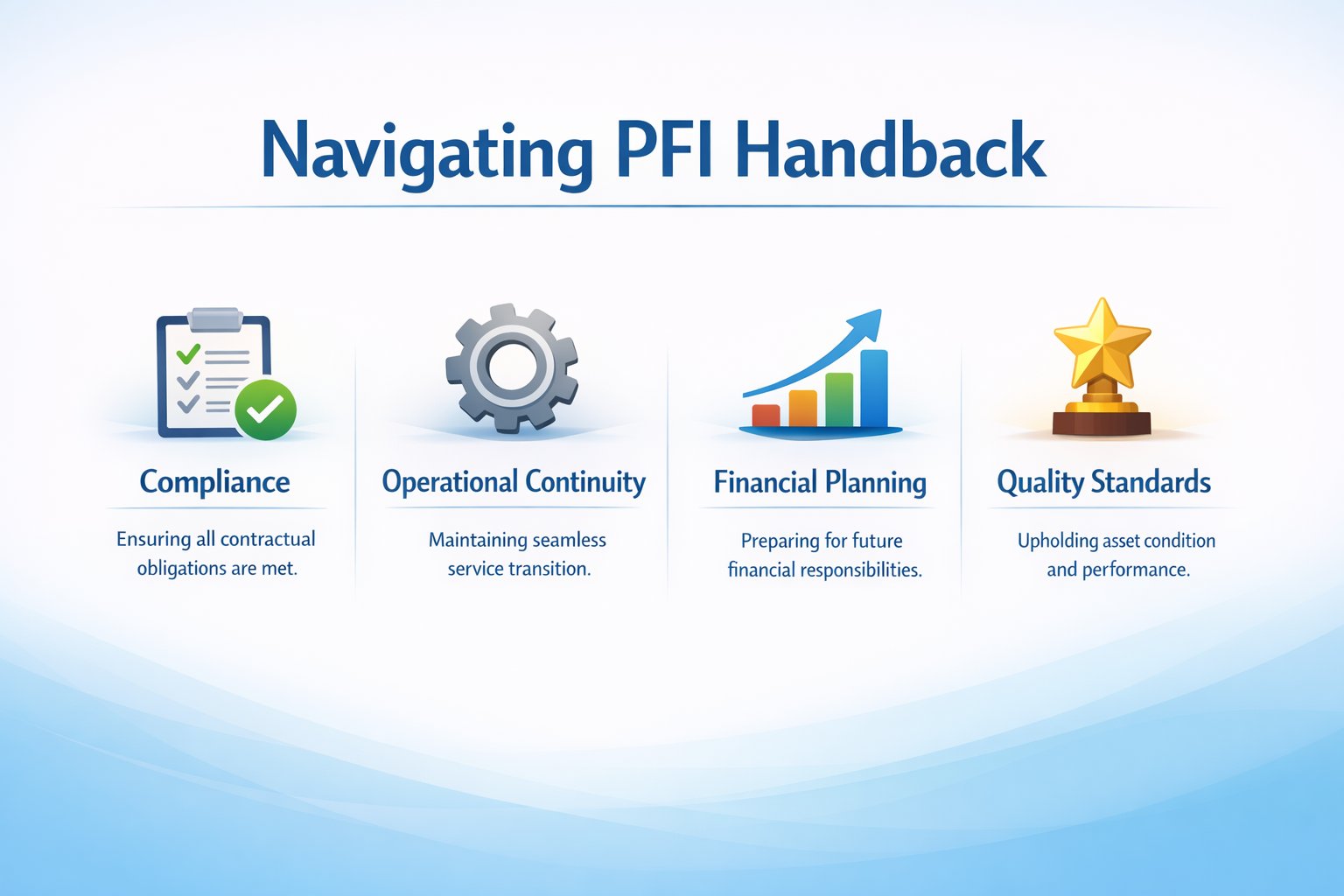
The Private Finance Initiative (PFI) handback is a critical phase for NHS estates, marking the shift of responsibilities from private partners back to the NHS. This transition affects operational continuity and financial planning, making it essential to prepare thoroughly to ensure compliance and uphold high standards in estate management. The effectiveness of this handback can significantly influence the quality of services provided to patients and the overall functionality of the NHS estate.
Understanding PFI Handback
PFI handback involves transferring control and management of an estate from a PFI contract back to the NHS. This phase carries significant legal and operational implications, necessitating comprehensive understanding and meticulous planning.
- Definition and importance: The end of a PFI contract signifies the return of estate management to the NHS, which must be prepared to assume full operational responsibility, including maintenance and service provision.
- Legal and operational considerations: Ensuring compliance with contractual terms is crucial; this includes evaluating the condition of facilities and assets, which should meet predetermined standards to avoid potential legal disputes.
- Challenges during handback: Common concerns include potential service provision gaps, as NHS personnel may need to adjust to new operational norms, and ensuring asset quality is up to the NHS’s required standards at the point of handback.
Strategic Planning for Seamless Transition
Strategic planning is vital for a successful PFI handback, ensuring a smooth transition that aligns with long-term estate goals. A well-structured strategy can mitigate risks and enhance operational readiness.
- Creating a comprehensive handback strategy: This strategy should include detailed timelines, resource allocation, and personnel training to manage the transition effectively. For example, a phased approach to handback can allow for gradual assumption of responsibilities, reducing operational strain.
- Identifying risks and mitigation strategies: Early risk detection through thorough assessments of current operations can prevent disruptions and ensure service continuity. Implementing a risk management framework can help identify potential pitfalls and establish contingency plans.
- Aligning handback with long-term objectives: The transition should not only focus on immediate handback issues but also support wider organisational goals, such as sustainability initiatives and improved patient care, ensuring strategic alignment with NHS priorities.
Compliance and Regulatory Requirements
Navigating the regulatory landscape during PFI handback demands strict adherence to numerous compliance requirements. Understanding these regulations is essential for safeguarding the NHS against potential legal issues.
- Key compliance requirements: Familiarity with relevant regulations—including health and safety standards, environmental regulations, and financial reporting obligations—is essential to avoid legal complications.
- Adhering to legal obligations: Meeting contractual obligations, including maintenance standards and service level agreements, is vital for a smooth handback. This may involve detailed inspections and necessary repairs prior to the formal transfer.
- Preparing for audits and inspections: Regular audits should be conducted to ensure compliance and uphold quality standards, with findings documented and addressed promptly to mitigate any issues.
Benchmarking for Improved Contract Performance
Benchmarking is crucial for enhancing contract performance during the PFI handback phase. It provides a reliable mechanism for evaluating performance and identifying areas for improvement.
- Setting management performance benchmarks: Establishing clear benchmarks—such as operational efficiency, patient satisfaction, and financial metrics—offers a framework to measure performance against industry standards and best practices.
- Leveraging benchmarking data: Data-driven insights facilitate informed decisions and continuous improvement. For instance, analyzing performance data against peer institutions can reveal potential enhancements in service delivery.
- Comparing metrics with industry standards: Identifying improvement areas through comparison with industry standards leads to best practice implementation, ensuring that the NHS estate is not only compliant but also competitive in service delivery.
Risk Management and Operational Continuity
Managing risks and preventing operational disruptions are essential for a successful PFI handback. Proactive measures can significantly enhance resilience during this transition.
- Identifying operational disruptions: Proactive identification of potential disruptions—such as staffing shortages or equipment failures—mitigates impacts and allows for timely interventions.
- Implementing risk mitigation strategies: Effective strategies, such as cross-training staff and maintaining inventory levels of critical supplies, ensure minimal service disruption during the transition period.
- Ensuring service continuity: Consistent service delivery maintains trust and operational efficiency, crucial for patient care. Establishing clear communication channels during the handback process can further reassure stakeholders and staff alike.
Conclusion
The PFI handback process, while complex, is manageable with strategic planning and compliance adherence. Benchmarking and risk management further enhance the likelihood of a smooth transition. Are you prepared to ensure a seamless transition for your NHS estate? Engage with EMC for expert advice and tailored solutions to navigate your PFI handback needs effectively.
Frequently Asked Questions (FAQ)
- What is the PFI handback process? The PFI handback process involves the transfer of control and management of an estate from a private finance initiative contract back to the NHS, requiring careful planning and compliance with regulations.
- How can NHS estates ensure compliance during handback? NHS estates can ensure compliance by familiarizing themselves with relevant regulations, adhering to legal obligations, and preparing for audits and inspections to address any issues promptly.
- What are the key benefits of benchmarking during the PFI handback? Benchmarking provides a framework for evaluating contract performance, identifying areas for improvement, and ensuring that service delivery meets industry standards and best practices.
- What strategies can mitigate risks during the handback process? Strategies to mitigate risks include proactive identification of potential disruptions, implementing risk management frameworks, and ensuring effective communication among stakeholders to maintain service continuity.
- How important is strategic planning for a successful handback? Strategic planning is essential for a successful handback, as it helps align the transition with long-term goals, mitigates risks, and enhances operational readiness.
Is your FM contract delivering what it should?
Book a free discovery call with an EMC consultant. Evidence led, no obligation.



Book a call with EMC
Tell us a little about your FM arrangements and we will come back within one working day to arrange a time.

