

Why Procurement Teams Need to Stop Pretending Otherwise
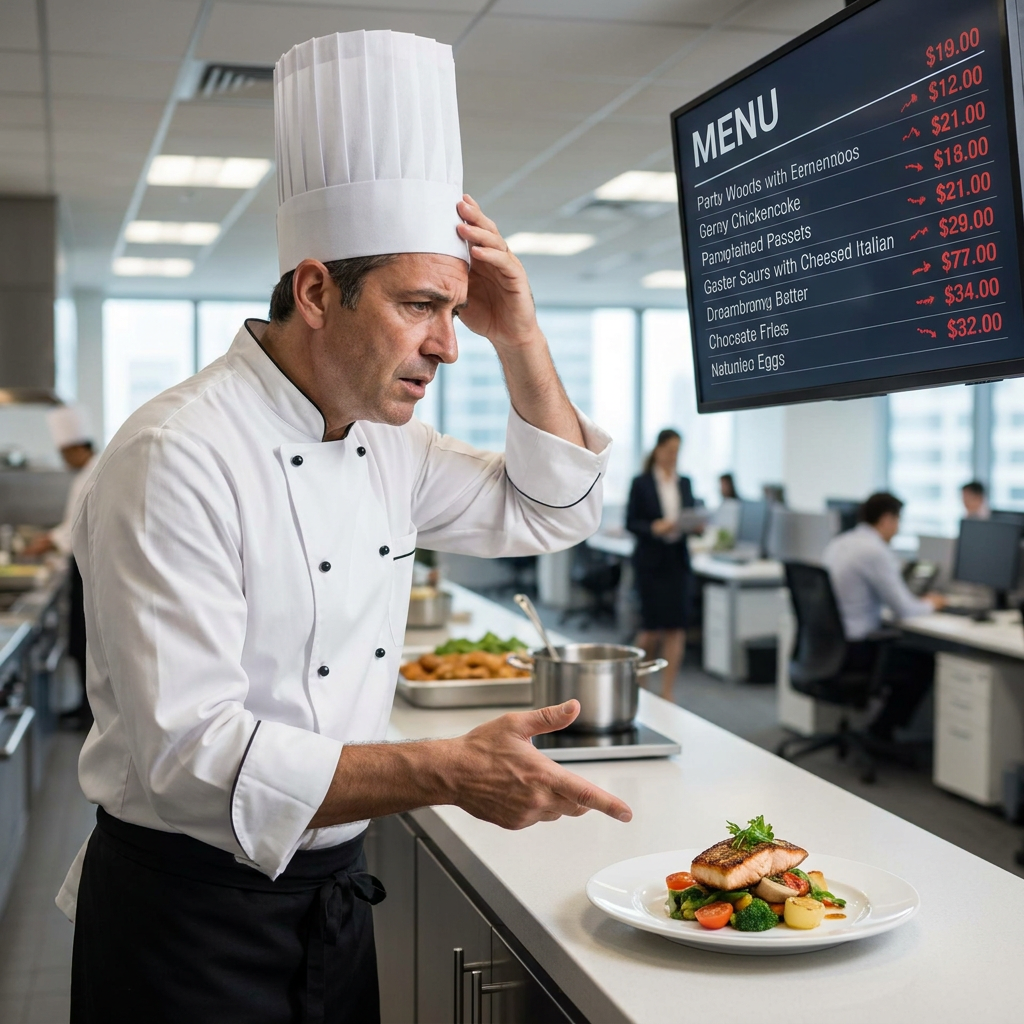
Rising food costs are exposing a deeper issue in workplace catering.
For years, workplace catering operated within a relatively predictable commercial environment. Buyers expected affordable lunches, generous menu choice and fixed contract pricing, while caterers absorbed incremental increases through operational efficiencies and supplier negotiation.
That model is now under significant strain.
The latest inflation data shows that food price pressure is no longer temporary or isolated. Producer input costs continue to rise across the supply chain, while labour, energy and logistics costs remain elevated. Although headline supermarket inflation may appear to be easing in some categories, workplace caterers face a fundamentally different operating reality.
Unlike retail food businesses, contract caterers are not simply selling products. They are delivering labour-intensive services within increasingly complex workplace environments where attendance patterns fluctuate daily, expectations continue to rise, and employers still want high-quality food at heavily subsidised prices.
The uncomfortable truth is this: cheap workplace lunches are becoming commercially unsustainable.
And many employers have yet to fully accept it.
Why workplace catering inflation is different from supermarket inflation
One of the biggest disconnects in workplace catering procurement is the assumption that catering inflation should broadly mirror supermarket pricing.
It does not.
Supermarkets benefit from enormous purchasing power, high-volume distribution, sophisticated automation and customer self-service models. Workplace catering operates on an entirely different cost structure.
Every meal served in a workplace restaurant carries additional operational burdens:
- Front-of-house staffing
- Food preparation labour
- Compliance and food safety management
- Variable office attendance levels
- Equipment maintenance
- Hospitality and service expectations
- Waste management
- Energy-intensive cooking operations
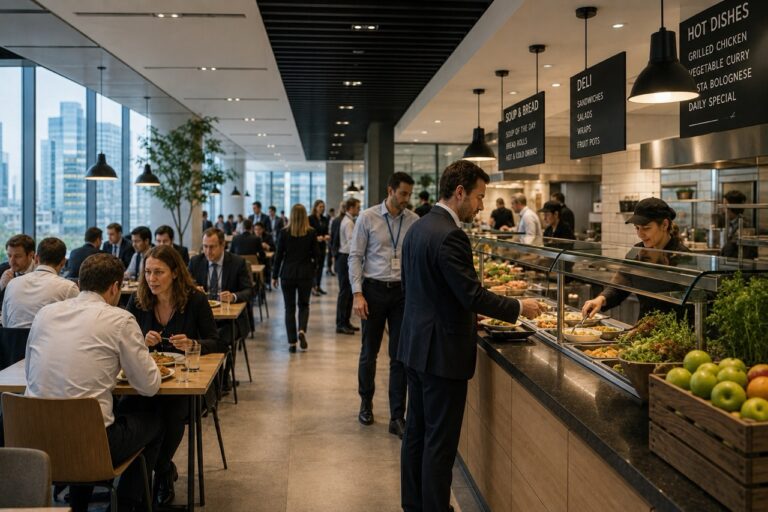
In many cases, workplace caterers are effectively running small hospitality operations inside offices that may only operate at partial occupancy several days per week.
Hybrid working has made forecasting demand significantly harder. On Tuesday and Wednesday, catering teams may experience peak traffic comparable to pre-pandemic levels. On Mondays and Fridays, demand can fall sharply.
That inconsistency creates waste risk and staffing inefficiency, both of which increase the true cost per meal.
Yet many procurement conversations still focus heavily on headline meal pricing rather than total service economics.
The subsidy conversation is becoming unavoidable
Historically, many employers treated workplace catering as a partially subsidised employee benefit designed to support wellbeing, productivity and workplace culture.
However, the market is entering a period where subsidy levels may need to become more explicit.
Caterers can only absorb cost inflation for so long before service quality, menu range or operational sustainability begin to deteriorate.
This leaves employers with difficult choices:
- Increase employee meal prices
- Increase employer subsidy levels
- Reduce menu choice
- Simplify service models
- Reduce hospitality standards
- Accept lower supplier margins
The final option is increasingly unrealistic.
The contract catering market already operates on relatively tight margins, and many operators spent years navigating the combined disruption of COVID recovery, labour shortages and supply chain instability.
As a result, there is growing tension between the workplace experience many employers want to create and the budget assumptions many still hold.
Food has become part of the return-to-office strategy
This matters because workplace catering is no longer viewed simply as a facilities service.
For many organisations, food has become part of the employee experience strategy.
A high-quality workplace café or restaurant can influence:
- Office attendance
- Employee satisfaction
- Collaboration opportunities
- Time spent onsite
- Informal meetings and social interaction
- Overall workplace perception
In competitive labour markets, employers increasingly use hospitality-style amenities to differentiate their workplaces.
That creates a contradiction.
Many businesses want premium workplace experiences while continuing to procure catering through heavily cost-driven frameworks developed for a very different market.
The result is growing commercial friction.
Employers may expect restaurant-quality offers at prices that no longer reflect the reality of ingredient, labour and operational costs.
Meanwhile, caterers are under pressure to maintain innovation, sustainability commitments and employee satisfaction while protecting already thin margins.
Smarter operators are redesigning menus, not simply cutting them
The strongest catering operators are not responding purely through blunt cost-cutting.
Instead, many are fundamentally redesigning workplace food offers around resilience, predictability and operational efficiency.
This includes:
Smarter menu engineering
Operators are focusing on dishes that maintain quality while offering better cost stability and lower waste risk.
Reduced complexity
Large, highly variable menus are becoming harder to sustain. Many sites are moving toward tighter, more focused food offers.
Better attendance forecasting
Some employers are sharing occupancy data more effectively with catering teams, allowing for improved production planning.
More flexible service models
Grab-and-go, pre-ordering and dynamic production models are helping reduce waste and labour inefficiencies.
Greater transparency around subsidy
Forward-thinking employers are increasingly treating food provision as a strategic investment rather than purely a procurement exercise.
The organisations adapting best are not necessarily those spending the most.
They are the ones aligning catering expectations with operational reality.
The risk of getting this wrong
There is a temptation for some organisations to view rising catering costs purely as an area for reduction.
However, aggressively squeezing catering contracts can create unintended consequences.
Reduced quality, inconsistent service, smaller portions and repetitive menus quickly damage employee perception.
At a time when many employers are still encouraging greater office attendance, poor workplace hospitality can undermine broader workplace objectives.
Employees increasingly compare workplace experiences against retail and hospitality environments outside the office.
If onsite food offers feel poor value, outdated or underinvested, the catering experience can quickly shift from an employee benefit to a source of dissatisfaction.
The challenge for employers is therefore not simply controlling costs.
It is understanding which costs matter strategically.
Consultants Conclusion
Rising food costs are not a short-term disruption for workplace catering. They represent a structural reset in how catering services need to be funded, designed and evaluated.
Too many organisations continue to approach catering procurement through outdated assumptions built around cheap ingredients, predictable occupancy and stable operating costs.
Those conditions no longer exist.
The most successful employers over the next few years will be the ones that stop viewing workplace catering purely as a low-cost employee convenience.
Instead, they will treat food provision as part of the wider workplace experience strategy — one that directly influences employee engagement, collaboration and office attendance.
That does not automatically mean spending more.
But it does require more realistic conversations around subsidy, menu design, operational flexibility and service expectations.
The era of inexpensive, high-choice, heavily serviced workplace dining delivered on compressed margins is coming under increasing pressure.
The organisations that recognise this early will be better positioned to create sustainable catering models that support both employee experience and long-term commercial resilience.
FAQ:
Why are workplace catering costs rising faster than expected?
Workplace catering is affected by more than just food inflation. Labour costs, energy prices, logistics, fluctuating occupancy levels and waste management all contribute to higher operating costs.
Why can’t caterers simply absorb the additional costs?
Most contract caterers already operate on relatively tight margins. After several years of supply chain disruption and labour pressure, many operators have limited capacity to absorb sustained inflation without reducing service quality or increasing prices.
How has hybrid working affected catering economics?
Hybrid working creates unpredictable demand patterns. Some office days experience very high occupancy, while others remain quiet. This inconsistency makes staffing and food production less efficient and increases waste risk.
Will employee meal prices continue to rise?
In many cases, some level of price increase is likely. However, employers may choose to offset this through greater subsidy or redesigned food offers focused on value and operational efficiency.
Are employers reducing menu choice to control costs?
Some are simplifying menus, but this is not always negative. Many operators are moving toward smaller, more focused menus designed to improve consistency, reduce waste and maintain food quality.
How important is catering to return-to-office strategies?
Increasingly important. High-quality food and hospitality services are now viewed by many employers as part of the overall workplace experience and can influence employee satisfaction and office attendance.
What should workplace catering buyers focus on now?
Buyers should move beyond headline meal pricing and evaluate total service value, including employee experience, operational resilience, attendance patterns, sustainability goals and long-term contract viability.
Is this inflation pressure likely to ease soon?
Some food categories may stabilise, but wider operational pressures — particularly labour, energy and supply chain costs — are expected to remain significant in the near term.
Is your FM contract delivering what it should?
Book a free discovery call with an EMC consultant. Evidence led, no obligation.

Book a call with EMC
Tell us a little about your FM arrangements and we will come back within one working day to arrange a time.

